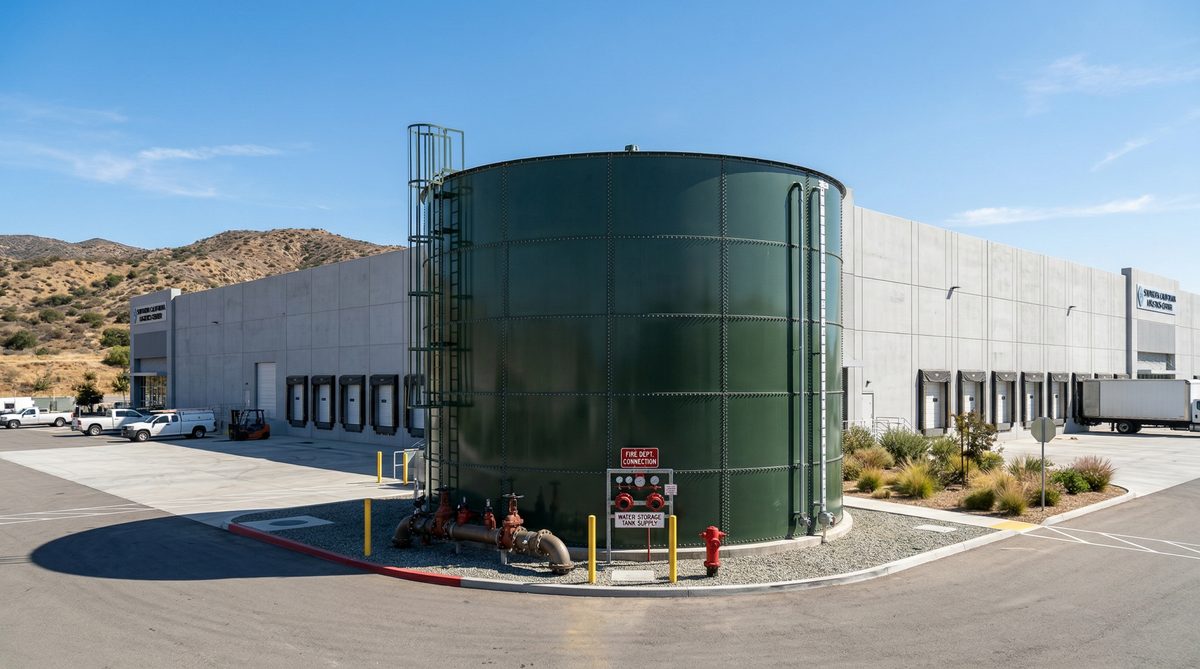
Fire suppression water tanks for warehouses, hospitals, data centers, and industrial facilities across Southern California. From 50,000 to 500,000+ gallons — engineered, permitted, and installed by a team with 28+ years of commercial tank experience.
Commercial, industrial, and institutional properties face fire flow demands far beyond residential requirements. Here are the property types we serve most.
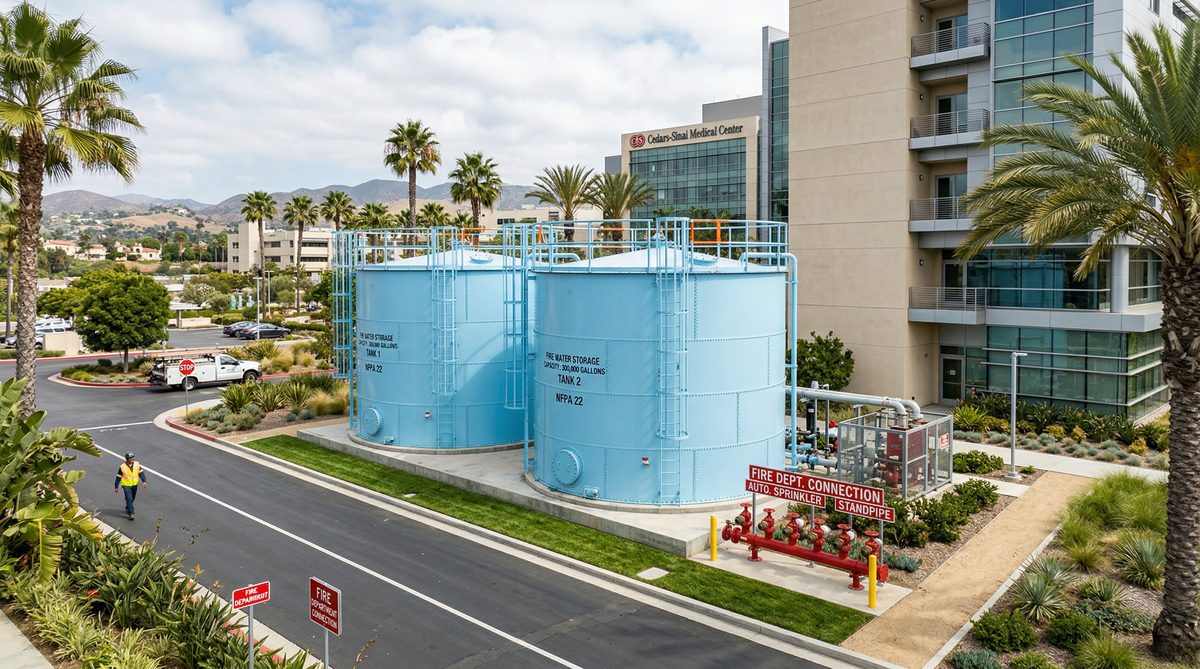
HCAI compliance, NPC-5 deadline requirements, 150 gal/licensed bed. Seismic tank design for essential services buildings. Redundant fire suppression water supply for patient safety.
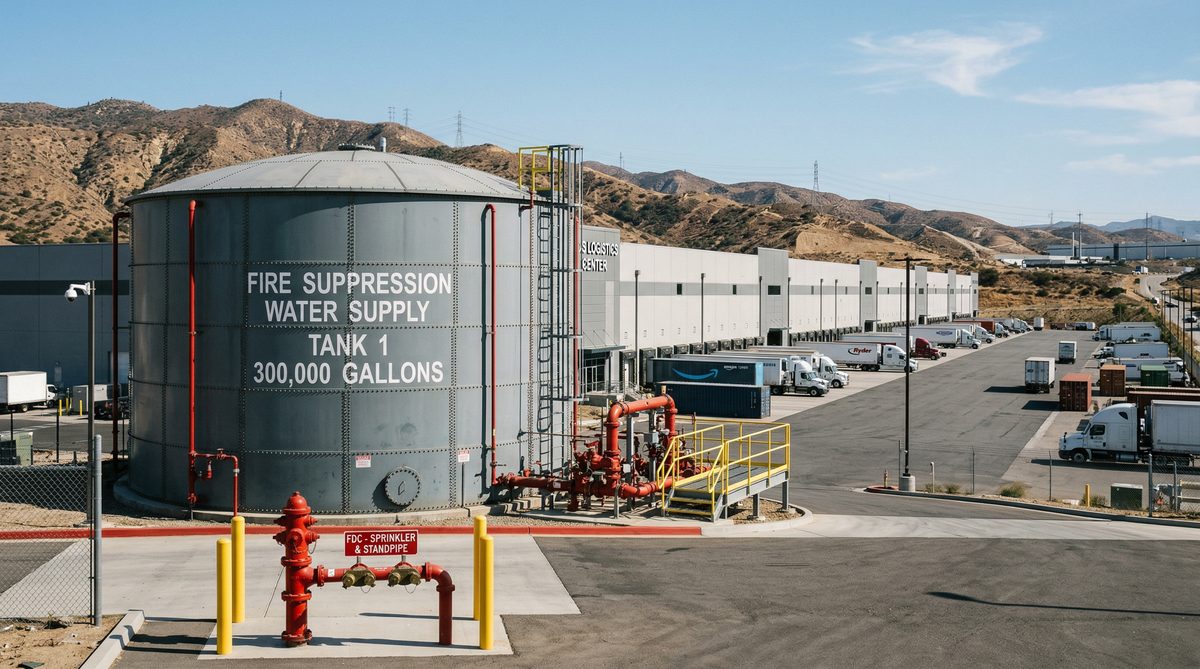
ESFR sprinkler demand, high-pile storage fire codes, 131,400+ gallon minimum for large facilities. Tank sizing driven by ceiling height, commodity class, and storage configuration.
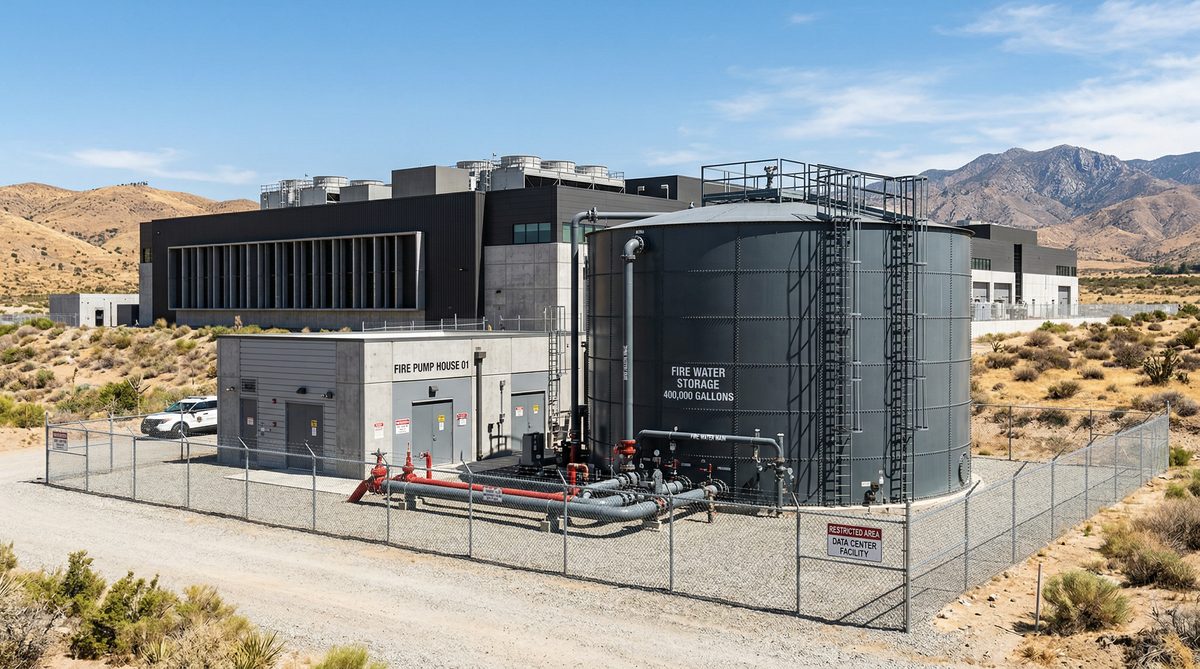
Redundant fire suppression with pre-action sprinkler systems. Mission-critical uptime demands dedicated water supply independent of municipal systems.
Hazardous materials storage, chemical facility fire codes, and high flow rate requirements. Industrial operations demand engineered fire water systems designed for specific process hazards.
Combined sprinkler and standpipe demand with 2–4 hour duration. High-rise and multi-story buildings require reliable water supply for fire department connections and interior suppression systems.
Division of the State Architect (DSA) requirements and Education Code fire safety mandates. Campus-wide fire suppression systems often require dedicated water storage tanks.
Commercial fire water storage operates at a fundamentally different scale than residential systems.
| Factor | Residential | Commercial / Industrial |
|---|---|---|
| Fire Flow | 500–1,250 GPM | 1,500–8,000+ GPM |
| Duration | 30–60 minutes | 2–4 hours |
| Typical Tank Size | 2,500–15,000 gal | 50,000–500,000+ gal |
| Tank Types | Bolted steel, FRP | Welded steel, concrete, bolted steel |
| Engineering | Basic sizing | Fire protection engineer required |
| Project Value | $10,000–$50,000 | $75,000–$2,000,000+ |
Commercial fire water tank projects involve multiple overlapping code requirements. We, along with our partners, help navigate all of them.
Based on IFC Table B105.1(2) as adopted by California. These are baseline requirements before sprinkler credits.
| Building Type | Required Fire Flow | Duration | Min. Tank (No Municipal) |
|---|---|---|---|
| Small commercial (< 5,000 sq ft) | 1,500 GPM | 2 hours | 180,000 gal |
| Medium commercial | 2,000–3,500 GPM | 2–3 hours | 240,000–630,000 gal |
| Large warehouse / industrial | 4,000–6,000 GPM | 3–4 hours | 720,000–1,440,000 gal |
| Hospital campus | 3,000–6,000 GPM | 3–4 hours | 540,000–1,440,000 gal |
Sprinkler systems can reduce required fire flow by up to 50%, but California mandates a 1,500 GPM floor for commercial properties. Your actual tank size depends on available municipal flow, sprinkler system design, and Authority Having Jurisdiction (AHJ) requirements.
Each Southern California county has unique amendments and enforcement patterns for commercial fire water storage.
From initial assessment to final inspection, we manage every phase of your commercial fire water tank project.
Evaluate your property, fire code requirements, and tank sizing needs.
Fire protection engineer designs the system to meet all NFPA and local code requirements.
We handle all permit applications, plan reviews, and coordination with your local fire authority.
Foundation, tank assembly, piping, fire department connections, and all site work.
Final inspection, hydrostatic testing, compliance documentation, and system commissioning.
Beyond the major property types above, we provide fire water storage solutions for a wide range of commercial and institutional facilities.
Whether you need a 50,000-gallon tank for a warehouse or a 500,000-gallon system for a hospital campus, we have the expertise to deliver. Tank Specialists of California has 28+ years of experience in commercial tank installation — including hospitals, military bases, and government facilities.
Request a Free ConsultationRelated County Guides